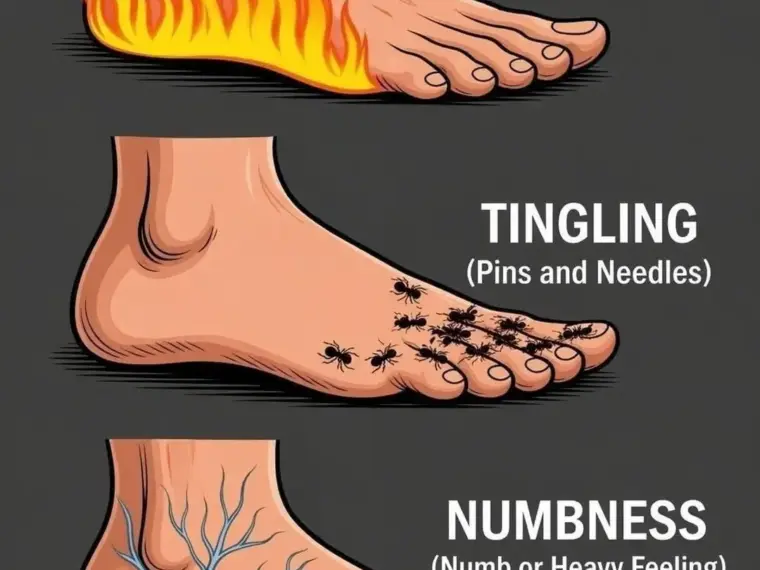
Your feet can reveal a lot about your overall health. Symptoms such as burning, tingling, numbness, swelling, or changes in skin color may sometimes point to underlying medical conditions. While these symptoms are often caused by something minor, persistent or worsening problems should be evaluated by a healthcare professional.
1. Burning Sensation
A burning feeling in the feet can be caused by:
- Nerve damage (peripheral neuropathy)
- Diabetes
- Vitamin B12 deficiency
- Alcohol-related nerve damage
- Certain medications
If the burning is frequent or severe, it’s important to seek medical advice.
2. Tingling or “Pins and Needles”
Occasional tingling after sitting in one position is normal. However, persistent tingling may be linked to:
- Peripheral neuropathy
- Diabetes
- Nerve compression
- Vitamin deficiencies
- Poor circulation
3. Numbness
Loss of feeling or numbness may result from:
- Diabetes
- Nerve injury
- Poor blood circulation
- Herniated discs
- Multiple sclerosis (less commonly)
Persistent numbness should always be evaluated.
4. Swollen Feet
Swelling may occur due to:
- Standing for long periods
- Pregnancy
- High salt intake
- Heart disease
- Kidney disease
- Liver disease
- Venous insufficiency
Seek urgent care if swelling is sudden, severe, or occurs with chest pain or shortness of breath.
5. Cold Feet
Feet that are constantly cold may be related to:
- Poor circulation
- Peripheral artery disease
- Diabetes
- Thyroid disorders
- Smoking
6. Foot Sores That Don’t Heal
Slow-healing wounds can be a warning sign of:
- Diabetes
- Poor circulation
- Infection
People with diabetes should inspect their feet daily.
7. Changes in Skin Color
Skin that appears:
- Blue or purple may suggest poor oxygen or circulation.
- Very pale may indicate reduced blood flow.
- Red and warm may signal inflammation or infection.
Any sudden color change deserves prompt medical attention.
8. Muscle Cramps
Frequent foot or calf cramps may be caused by:
- Dehydration
- Low potassium, magnesium, or calcium
- Overuse
- Poor circulation
- Certain medications
Staying hydrated and maintaining a balanced diet may help reduce cramps.
9. Pain While Walking
Pain in the feet or calves during walking that improves with rest may be associated with:
- Peripheral artery disease
- Arthritis
- Tendon problems
- Nerve disorders
A healthcare provider can determine the underlying cause.
Tips for Healthy Feet
- Wear properly fitting shoes.
- Stay physically active.
- Manage blood sugar if you have diabetes.
- Eat a balanced diet rich in vitamins and minerals.
- Avoid smoking.
- Inspect your feet regularly for cuts, blisters, or color changes.
- Keep your feet clean and moisturized.
When to Seek Medical Care
Contact a healthcare professional if you experience:
- Persistent burning, tingling, or numbness.
- Foot ulcers or wounds that won’t heal.
- Severe swelling in one leg.
- Sudden loss of sensation.
- Foot pain with fever, redness, or warmth.
- Changes in skin color accompanied by pain or coldness.
Final Thoughts
The image highlights burning, tingling, and numbness, which can be symptoms of peripheral neuropathy—a condition caused by damage to the peripheral nerves. Diabetes is one of the most common causes, but vitamin deficiencies, alcohol misuse, certain medications, infections, thyroid disease, and nerve compression can also contribute.
These symptoms do not automatically mean you have a serious disease, but if they are persistent, worsening, or affecting your daily activities, it’s important to seek medical evaluation so the underlying cause can be identified and treated appropriately.