This title may seem like a miracle, as seen in the enticing videos on social media, but let’s look at it with a bit of realism.
There is no miracle solution or specific product that will allow an orchid to produce 100 new shoots and bloom continuously 365 days a year. Orchids need their natural dormancy cycle to rebloom.
However, online recipes promising this “trick” most often say one of these three things. Here’s a list of what’s commonly placed under orchids and how it actually works:
1. Ice cube
The myth is that you should place an ice cube on the substrate every week so that the orchid is perfectly watered and blooms abundantly.
In reality, while ice prevents overwatering (the most common cause of problems in orchids), these plants are tropical. Prolonged shock from ice water can damage their roots. A regular lukewarm shower or soaking the pot in stagnant water once or twice a week is much more effective.
2. Garlic cloves (or garlic water)
The myth is that garlic stimulates the growth of dozens of new stems.
In reality, garlic contains sulfur and possesses powerful antiseptic and antibacterial properties. It primarily acts as a preventative measure against fungi and parasites and can give the plant a slight boost (like a mild stimulant). But it certainly won’t cause an explosive growth of hundreds of shoots.
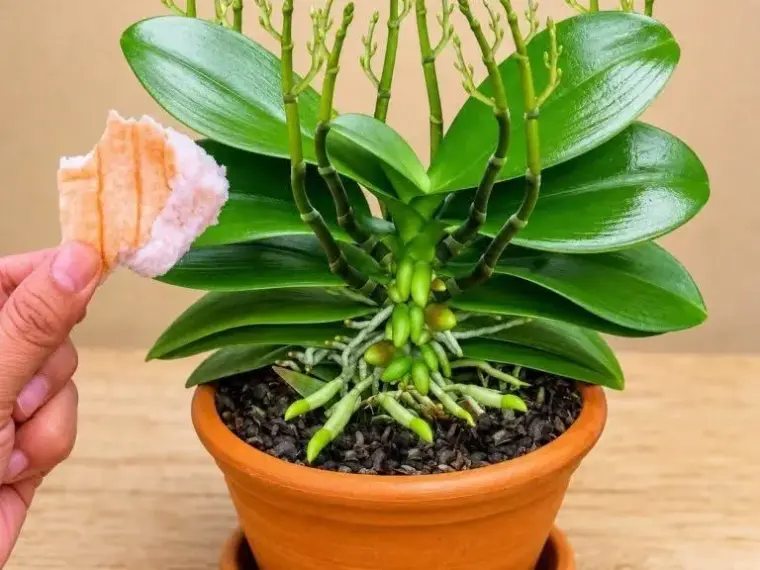
3. A banana peel (or a piece of yeast)
What is the myth? That simply placing a piece of potting soil under the roots is enough to nourish the orchid all year round.
In reality, banana peels are rich in potassium and phosphorus, elements that promote flowering. Yeast contains B vitamins. However, if you put them directly in the pot, they will rot, mold, and attract flies. It’s much safer to make a light infusion (fertilizer) that you can use occasionally to water your orchid.
Do you want your orchid to truly thrive?
Instead of “magic tricks,” what will be most beneficial to him is:
Ideal light: plenty of indirect light (ideally an east- or west-facing windowsill). Without light, the orchid won’t bloom, even if you place a support underneath.
Temperature difference: for the orchid to develop a new stem, it needs a slight drop in nighttime temperature (about 3 to 5°C lower than the daytime temperature) for several weeks in autumn.
Proper watering: only water when the roots in the transparent pot turn gray. If they are green, there is still enough water.
Are you trying to save an orchid that isn’t blooming, or are you simply looking for ways to keep your flowers looking fresh for as long as possible?