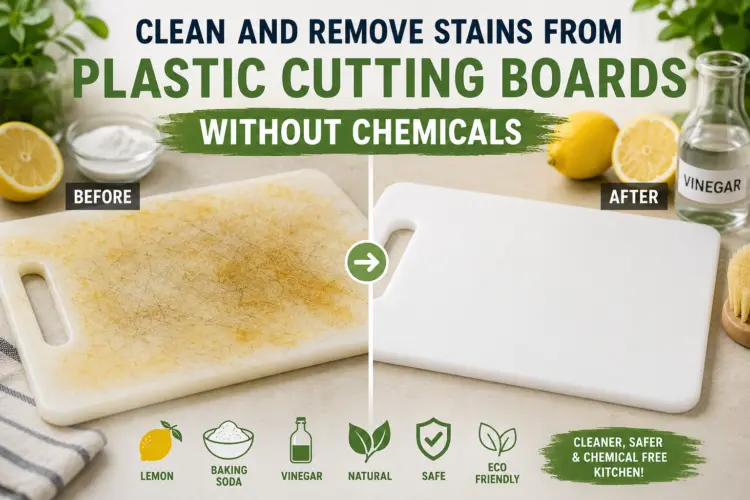
🧼 Clean and Remove Stains From Plastic Cutting Boards Without Chemicals
Plastic cutting boards are a kitchen essential. They’re lightweight, affordable, dishwasher-safe, and perfect for everything from slicing vegetables to prepping raw meat. But over time, even the best plastic cutting boards develop deep stains, unpleasant odors, and stubborn discoloration that make them look old and dirty.
The good news? You don’t need harsh chemicals or expensive cleaners to restore your cutting boards. With a few natural household ingredients, you can safely clean, deodorize, disinfect, and remove stains from plastic cutting boards while keeping your kitchen healthier and eco-friendly.
In this complete guide, you’ll learn the best natural methods to clean plastic cutting boards, remove tough stains, eliminate smells, and extend the life of your kitchen tools — all without bleach or chemical-based products.
🍋 Why Plastic Cutting Boards Get Stained So Easily
Plastic cutting boards are porous, which means tiny grooves and knife marks trap food particles, grease, bacteria, and pigments from colorful foods.
Common stain culprits include:
- Tomatoes
- Strawberries
- Turmeric
- Beets
- Curry powder
- Raw meat juices
- Garlic and onions
- Coffee and tea
As knife marks deepen, stains settle inside the surface, making ordinary soap less effective.
That’s why natural deep-cleaning methods work best.
🧂 The Best Natural Ingredients for Cleaning Cutting Boards
You probably already have everything you need in your kitchen.
Here are the most effective chemical-free cleaners:
🍋 Lemon
Lemon naturally breaks down grease, removes odors, and brightens stains thanks to its citric acid.
🥄 Baking Soda
Baking soda acts as a gentle abrasive that lifts stains without damaging plastic.
🍶 White Vinegar
Vinegar helps disinfect surfaces naturally and cuts through lingering smells.
🧂 Coarse Salt
Salt scrubs away residue while helping absorb moisture and odors.
☀️ Sunlight
Direct sunlight naturally helps whiten and sanitize plastic boards.
🧽 How to Clean Plastic Cutting Boards Daily
Daily cleaning prevents stains from becoming permanent.
🥣 What You Need
- Warm water
- Mild dish soap
- Soft sponge
- Dry towel
✅ Steps
- Rinse the cutting board immediately after use.
- Apply warm water and dish soap.
- Scrub thoroughly, especially inside knife grooves.
- Rinse well.
- Dry completely before storing.
Avoid stacking wet cutting boards because trapped moisture encourages bacterial growth.
🍋 How to Remove Deep Stains Naturally
When your board starts looking yellow, orange, or brown, try this powerful natural stain remover.
🧂 Baking Soda and Lemon Method
This is one of the most effective non-toxic cleaning combinations.
Ingredients
- 2 tablespoons baking soda
- 1 lemon cut in half
Instructions
- Sprinkle baking soda generously over the stained area.
- Rub the lemon half directly onto the board.
- Squeeze extra lemon juice while scrubbing.
- Let the mixture sit for 10–15 minutes.
- Scrub again with a sponge.
- Rinse thoroughly and dry.
The fizzing reaction helps lift deep stains naturally.
🌞 The Sunlight Whitening Trick
Sunlight is surprisingly effective for whitening plastic.
☀️ How It Works
UV rays naturally help fade discoloration and kill odor-causing bacteria.
✅ Steps
- Wash the cutting board thoroughly.
- Coat lightly with lemon juice.
- Place outside in direct sunlight for several hours.
- Rinse and dry.
This method works especially well for yellowed white cutting boards.
🍶 How to Remove Strong Odors From Cutting Boards
Garlic, onions, fish, and meat can leave persistent smells behind.
🧼 Vinegar Deodorizing Method
You Need
- White vinegar
- Spray bottle or cloth
Instructions
- Spray vinegar across the entire surface.
- Let sit for 5–10 minutes.
- Rinse with warm water.
- Dry completely.
The vinegar smell disappears as it dries, taking unwanted odors with it.
🧂 Salt Scrub for Tough Residue
If sticky food buildup remains trapped in grooves, salt works beautifully.
🥄 Instructions
- Sprinkle coarse salt across the board.
- Rub using half a lemon or a damp sponge.
- Scrub in circular motions.
- Rinse thoroughly.
This method removes grime while polishing the surface naturally.
🚫 Mistakes That Ruin Plastic Cutting Boards
Many people accidentally shorten the life of their cutting boards.
Avoid these common mistakes:
❌ Using Steel Wool
Steel wool scratches plastic and creates deeper grooves for bacteria.
❌ Leaving Boards Wet
Moisture trapped underneath encourages mold and odor.
❌ Ignoring Deep Knife Marks
Severe grooves trap bacteria and become difficult to sanitize.
❌ Using Harsh Chemicals Excessively
Strong bleach solutions can weaken plastic over time and leave residues.
🔥 How to Sanitize Plastic Cutting Boards Naturally
Cleaning removes dirt, but sanitizing helps reduce bacteria.
🍋 Natural Sanitizing Solution
Ingredients
- 1 cup white vinegar
- Juice of 1 lemon
Instructions
- Combine ingredients in a spray bottle.
- Spray generously.
- Let sit for 10 minutes.
- Rinse and dry.
This provides a safer alternative to heavy chemical cleaners.
🥩 Separate Boards Prevent Cross-Contamination
One of the best kitchen habits is using different boards for different foods.
🟢 Recommended Setup
- One board for vegetables
- One for raw meat
- One for bread or cooked foods
This reduces bacterial spread and keeps boards cleaner longer.
⏰ How Often Should You Deep Clean Cutting Boards?
For best hygiene:
- Daily: Wash after every use
- Weekly: Use baking soda and lemon treatment
- Monthly: Deep deodorizing and sunlight whitening
Frequent maintenance prevents permanent discoloration.
🧼 Dishwasher vs Hand Washing
Many plastic cutting boards are labeled dishwasher-safe, but hand washing often extends their lifespan.
🚿 Dishwasher Pros
- Convenient
- High heat sanitizes
- Good for quick cleaning
✋ Hand Washing Pros
- Less warping
- Gentler on plastic
- Better for stain treatment
If using a dishwasher, place boards securely to prevent bending.
♻️ When to Replace a Plastic Cutting Board
Even with excellent care, cutting boards don’t last forever.
Replace your board if you notice:
- Deep grooves that won’t clean
- Persistent odors
- Cracks or peeling
- Warping
- Stains that remain after deep cleaning
Old damaged boards can harbor bacteria that cleaning cannot fully remove.
🍃 Benefits of Chemical-Free Cleaning
Natural cleaning methods are becoming increasingly popular for good reason.
🌱 Safer for Your Family
No harsh chemical residues touch your food.
💰 Budget-Friendly
Most ingredients cost only pennies per use.
🌍 Eco-Friendly
Natural ingredients reduce environmental waste and toxic runoff.
🏡 Better Indoor Air Quality
No strong fumes or artificial fragrances.
🧴 DIY Natural Cutting Board Cleaning Paste
Want an all-purpose homemade cleaner?
🥣 Ingredients
- 3 tablespoons baking soda
- 1 tablespoon lemon juice
- 1 tablespoon white vinegar
🧼 Directions
- Mix into a thick paste.
- Spread over the cutting board.
- Let sit for 15 minutes.
- Scrub gently.
- Rinse thoroughly.
This works great for stubborn discoloration and lingering odors.
🍓 Foods That Cause the Worst Stains
Some foods are especially notorious for staining plastic.
🔴 Common Offenders
- Tomato sauce
- Berries
- Beetroot
- Turmeric
- Red peppers
- Curry
- Chili paste
Cleaning immediately after use helps prevent lasting marks.
🧠 Pro Tips for Keeping Boards Cleaner Longer
✅ Wash Immediately
Fresh stains are much easier to remove.
✅ Dry Upright
Allow airflow on both sides.
✅ Oil Isn’t Necessary
Unlike wood boards, plastic doesn’t require conditioning oils.
✅ Use Gentle Scrubbers
Soft brushes protect the surface.
✅ Store Properly
Keep boards in a dry, ventilated area.
🍽️ Natural Cleaning vs Bleach: Which Is Better?
Bleach is powerful, but many people prefer avoiding it for everyday kitchen cleaning.
🧪 Bleach Cleaning
Pros
- Strong disinfectant
- Fast sanitizing
Cons
- Harsh fumes
- Potential residue
- Can weaken plastic
🍋 Natural Cleaning
Pros
- Non-toxic
- Affordable
- Safer for food prep
- Environmentally friendly
Cons
- May require repeated treatments for severe stains
For routine maintenance, natural methods are usually more than enough.
🏡 Final Thoughts
Plastic cutting boards work hard in every kitchen, but stains and odors don’t mean they’re ruined. With simple natural ingredients like lemon, baking soda, vinegar, and salt, you can safely restore your cutting boards without relying on harsh chemicals.
Consistent cleaning, quick stain treatment, and proper drying will keep your boards looking fresh, smelling clean, and lasting much longer.
The next time your cutting board looks stained or worn out, skip the bleach and try these natural methods first. Your kitchen — and your wallet — will thank you.
❓ Frequently Asked Questions
🍋 Does lemon really disinfect cutting boards?
Lemon has natural antibacterial properties and helps reduce odors and surface bacteria, especially when combined with salt or baking soda.
🧂 Can baking soda damage plastic?
No. Baking soda is a mild abrasive and safe for most plastic cutting boards.
☀️ Does sunlight sanitize cutting boards?
Sunlight can help reduce bacteria and whiten stains naturally, though it should complement regular washing.
🚫 Can I use bleach occasionally?
Yes, but frequent bleach use may weaken plastic over time. Natural methods are safer for regular maintenance.
🥩 Are plastic boards safer than wooden boards?
Both can be safe when properly cleaned. Plastic boards are dishwasher-safe, while wooden boards naturally resist some bacteria.
🧼 How do I remove yellow stains from white cutting boards?
Use baking soda and lemon, then place the board in direct sunlight for several hours for natural whitening.