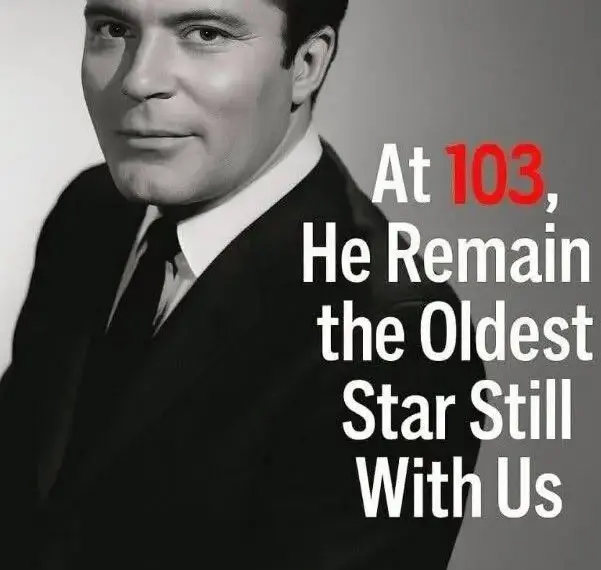
Every so often, a social media post draws attention with a bold claim about a Hollywood legend. One such headline reads, “At Almost 103, He Is the Oldest Living Star,” alongside a striking black-and-white portrait of a classic actor.
A headline like that naturally sparks curiosity. Who is the person in the photograph? How old are they today? And is the claim accurate?
Before sharing it, those details deserve verification. A photograph may be misidentified, an age may be outdated, and the phrase “oldest living star” may lack a clear definition. Without the actor’s name and reliable, current information, the headline should be treated as an unverified claim.
Beyond the question of age, however, lies a story worth exploring: why certain performers remain so meaningful to audiences long after their most famous roles.
For many viewers, classic films are tied to personal memories—watching television with family, visiting a neighborhood movie theater, or discovering a favorite actor for the first time. Seeing a familiar face decades later can bring those moments back.
A performer’s legacy also extends beyond nostalgia. A memorable character, a distinctive voice, or a remarkable performance can continue to find new audiences through screenings, television broadcasts, and home viewing.
Whether a legendary actor is still working or has retired, their career deserves to be remembered accurately. Celebrating their achievements begins with getting the basic facts right.
Before accepting an extraordinary claim about someone’s age, it is worth asking a simple question: Who is pictured, and what do reliable sources actually confirm?