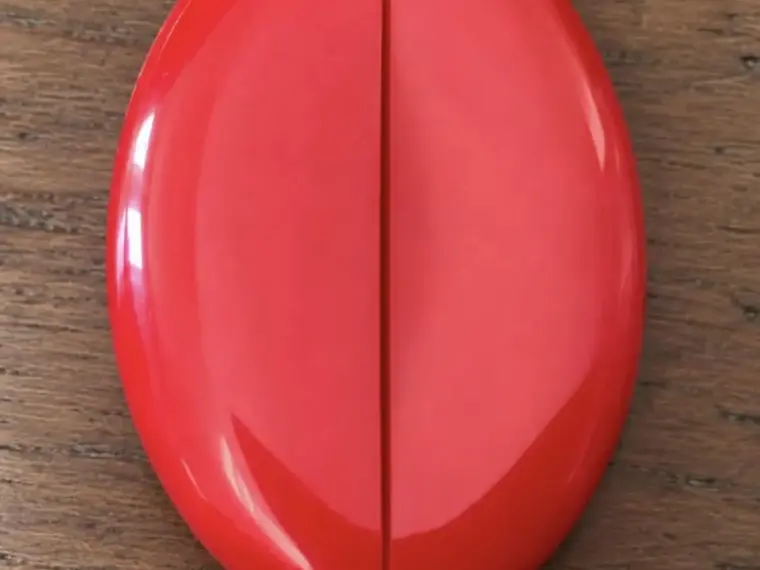
At first glance, the bright-red oval in your palm might look like an old cosmetics case, an earbud holder, or a vintage fidget toy. Its smooth, flexible body has no visible zipper, button, clasp, or snap. So how was it supposed to open?
For decades, these little objects were common in purses, pockets, glove compartments, and desk drawers throughout North America and Europe. From the 1950s through the 1980s, loose change was essential for everyday tasks, including making calls from public telephones, paying bus fares, using parking meters, and operating vending machines or laundromat equipment. This simple-looking item offered a clever way to keep those coins together.
The secret was a thin slit across the middle of its rubber or vinyl body. When you squeezed the two ends, the sides curved outward and the slit opened wide enough to retrieve the contents. Release the pressure, and the material sprang back into shape, closing the opening without a separate fastening mechanism.
Local businesses soon recognized its appeal. Banks, gas stations, insurance companies, hardware stores, and other businesses distributed these squeeze coin purses as inexpensive promotional gifts. Their surfaces carried company names, logos, addresses, and telephone numbers, turning a useful pocket accessory into a small advertisement.
But advertising alone does not explain why so many people remember them.
Their lasting appeal came from their practicality. With one hand, you could squeeze the ends, take out a few coins, and let the purse close again. There was no zipper to pull or tiny metal clasp to wrestle with. The design relied on the flexibility of the material, with almost no moving parts.
Although cards and digital payments have reduced the need to carry loose change, the same design remains useful for keeping small belongings together. Tokens, guitar picks, keys, small hardware, earbuds, and short cables can all be easy to misplace.
Vintage versions also appeal to collectors, particularly those with distinctive graphics or colorful business advertising. What once served as an ordinary place to keep spare change has become a small reminder of everyday life in an earlier era.