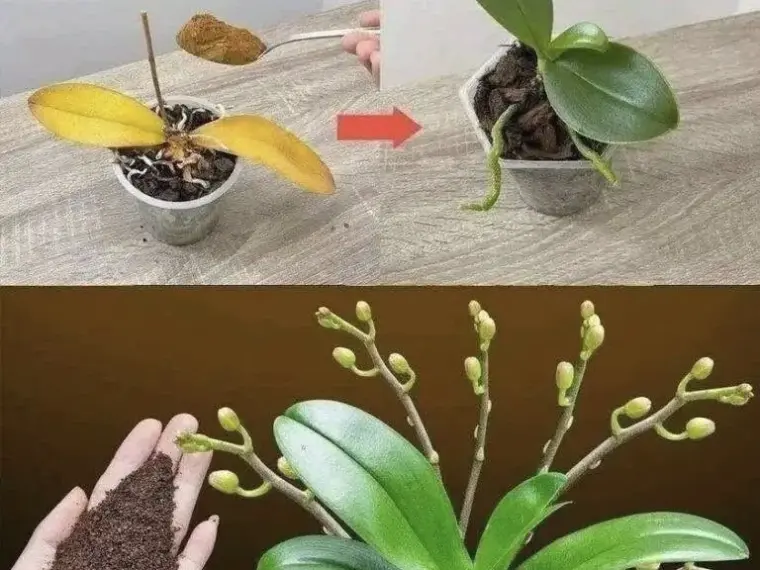
If your orchid is losing leaves, has weak roots, or has stopped blooming, don’t throw it away just yet. The image shows a popular home method involving cinnamon, but there are some important things to know before trying it.
Cinnamon can sometimes be used around damaged plant tissue, but it is not a fertilizer or a miracle cure that can bring a dying orchid back to life.
🌱 Why Is Your Orchid Struggling?
One of the most common problems with orchids is improper watering.
Popular orchids such as Phalaenopsis don’t like to sit in constantly wet conditions. Too much moisture can cause the roots to rot, while prolonged dryness can also weaken the plant.
Common warning signs include:
- Yellow or limp leaves
- Soft, brown, or black roots
- Very few healthy roots
- No new growth
- Leaves falling off
- No flowers for a long period
🍂 Can Cinnamon Help an Orchid?
Cinnamon is often used by gardeners around small cuts or damaged plant tissue because it contains compounds with antimicrobial properties.
However, cinnamon should not be considered a treatment for root rot.
You also shouldn’t cover healthy orchid roots with large amounts of cinnamon or mix excessive cinnamon into the growing medium. Cinnamon can be drying to plant tissues.
✂️ What Should You Do About Rotten Roots?
If your orchid has rotten roots, correcting the underlying problem is much more important than simply adding cinnamon.
1. Remove the Orchid From Its Pot
Carefully take the orchid out and remove the old growing medium so you can inspect all of the roots.
2. Check the Roots
Healthy orchid roots are generally firm. Rotten roots may be soft, brown, black, mushy, or hollow.
3. Remove Dead Roots
Using clean, disinfected scissors or pruning shears, carefully cut away roots that are clearly dead or rotten.
4. Let the Damaged Areas Dry
Don’t immediately place the plant into soaking-wet material. Allow the cut areas some time to dry.
5. Repot the Orchid
Use a well-draining orchid potting mix, usually containing materials such as bark.
Regular garden soil is generally unsuitable for common orchids because it holds too much moisture around their roots.