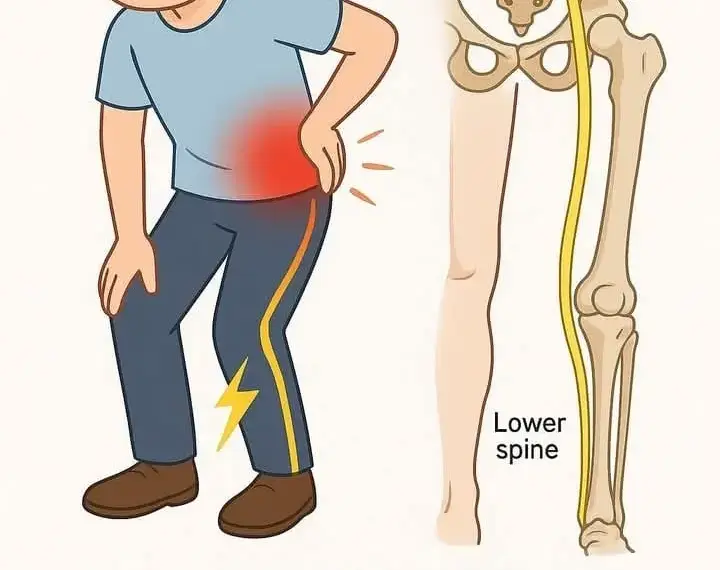
Sciatica, or sciatic nerve pain, is one of the most common caus
es of discomfort in the lower back and legs. It occurs when the sciatic nerve—the longest nerve in the body, running from the lower spine down through the legs—becomes irritated or compressed. The pain can range from mild discomfort to severe, stabbing pain that interferes with daily life.
While drug treatment is sometimes necessary, many people find relief in natural remedies that reduce inflammation, improve mobility, and promote long-term healing.
1. Hot and cold therapy
Cold compresses relieve inflammation and acute pain.
Heat packs relax tense muscles and improve blood circulation.
For maximum relief, alternate between hot and cold for 15–20 minutes.
2. Gentle stretching and yoga
Simple stretching exercises can relieve pressure on the sciatic nerve.
Knee to Chest Stretch
Spinal twist in a sitting position
Pigeon Pose (modify as needed)
Always move slowly and avoid forcing your body into positions that cause pain.
3. Be active
Although rest is important in the early stages, too much bed rest can worsen sciatica. Gentle exercise, such as walking, swimming, or light yoga, can help improve circulation and strengthen the back and abdominal muscles.
4. Therapeutic massage
Massage can reduce muscle tension, improve blood flow, and relieve nerve compression. Focus on the lower back, hips, and hamstrings, where tension often builds up.
5. Herbal and Natural Anti-Inflammatory Remedies
Turmeric (curcumin has anti-inflammatory properties).
Ginger tea that naturally relieves pain.
Omega-3 fatty acids (found in fish oil or flaxseed).
6. Correct posture and ergonomics
Sit with your feet flat on the floor and your spine supported.
Avoid slouching and sitting for long periods.
If you work at a desk, use a pillow or lumbar support.
7. Lifestyle changes
Maintain a healthy body weight to take pressure off your lower back.
Quit smoking – nicotine reduces blood flow to the spine, delaying healing.
Get good sleep to give your muscles and nerves time to regenerate.
When to see a doctor
Natural remedies can significantly relieve symptoms, but you should seek medical advice if:
The pain is severe and persistent.
You experience numbness or weakness in your leg.
Loss of bladder or bowel control (symptom of a serious illness).