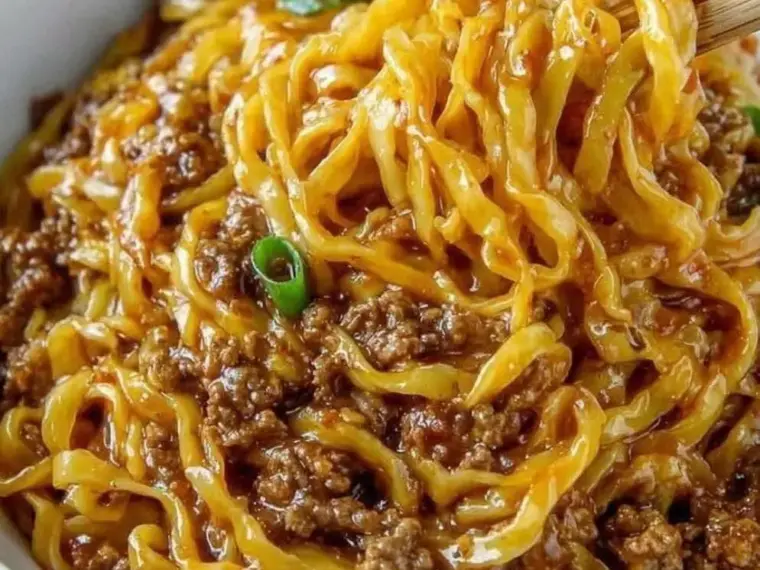
If there is one flavor profile that perfectly balances comfort with excitement, it is the sweet, savory, and slightly spicy magic of Mongolian beef. But instead of ordering expensive, greasy takeout in cardboard boxes that gets soggy on the drive home, we are bringing those brilliant, bold flavors right into your own kitchen with a humble, budget-friendly twist: ground beef and pantry noodles.
This Mongolian Ground Beef Noodles recipe is a masterclass in modern, simple cooking. It takes the complex, sticky, glossy glaze of a restaurant favorite and achieves it using everyday ingredients you already have. It is sweet, it is savory, it has a whisper of heat, and it comes together in a single skillet in under 20 minutes.
No deep frying. No complicated wok techniques. Just brown, simmer, toss, and serve.
Why You’ll Love This Recipe
🥡 The Ultimate “Fakeout”: It tastes exactly like your favorite takeout, but costs a fraction of the price and uses ingredients you can pronounce!
⏱️ 20 minutes from start to finish: The perfect no-fuss weeknight hero for when you want something delicious without the fuss.
💛 The “More Effort Than It Is” Trick: The glossy, caramelized sauce clinging to the noodles makes it look like a complex, slow-simmered Asian glaze, but it’s just soy sauce, brown sugar, and a little cornstarch!
🍽️ Highly Interactive: It is the perfect base for a “build-your-own” noodle bowl, letting everyone customize their perfect bite.
🔬 A Lesson in Kitchen Science: You’ll learn the exact chemistry of a “slurry” and how to create a restaurant-quality, glossy emulsion in your own skillet!
Ingredients You’ll Need
(Large 12-inch skillet; serves 4 generously)
The Savory Base
1 lb Lean Ground Beef (85/15 or 90/10) (Or swap for ground turkey or chicken!)
8 to 10 oz Dried Noodles (Spaghetti, linguine, or lo mein noodles work beautifully. Don’t bother buying fancy Asian wheat noodles; standard Italian pasta has the exact same texture when coated in this sauce!)
The “Mongolian” Glaze
½ cup Low-Sodium Soy Sauce (Low-sodium is crucial here so the dish doesn’t become a salt bomb!)
½ cup Packed Brown Sugar (The secret to the deep, caramel-like flavor. See the science below!)
1 tbsp Sesame Oil (The “restaurant aroma” in a bottle. Don’t skip it!)
4 cloves Garlic, minced (Or 1 tbsp from a jar.)
1 tbsp Fresh Ginger, grated (Or 1 tsp ginger paste.)
½ tsp Crushed Red Pepper Flakes (Adjust for your preferred level of “sweet-and-spicy” heat!)
The Thickener & The Garnish
1 tbsp Cornstarch mixed with 2 tbsp Cold Water (The “Slurry”.)
2 Green Onions, thinly sliced
1 tbsp Toasted Sesame Seeds
💡 Pro Tips & The Science of the “Perfect Glaze”:The Science of the “Caramel” Shortcut: Traditional Mongolian beef uses hoisin sauce, oyster sauce, and rock sugar to get its dark, complex flavor. The Science: By using brown sugar instead of white sugar, you are introducing molasses into the pan. When the molasses heats up with the soy sauce, it mimics the deep, fermented, caramel notes of those expensive Asian sauces, giving you a rich, restaurant-quality glaze using only one ingredient!The “Slurry” Magic: How do you get that sauce to stick perfectly to the noodles instead of pooling at the bottom of the bowl? The Science: Cornstarch is a long chain of sugar molecules. When you mix it with cold water and heat it in the skillet, the starch granules swell and burst, absorbing the liquid and creating a gel. This gel traps the oil and the soy sauce together in a glossy, thick emulsion that clings beautifully to every single strand of noodle!The “Hot Wok” Sear: Just like we do with our burgers, don’t stir the ground beef the second it hits the pan! Let it sit undisturbed for 2 minutes to form a dark, crispy crust. That crust is pure, concentrated beef flavor (the Maillard reaction) that will elevate the entire dish.
Step-by-Step Instructions (Glossy, Savory, Foolproof)
1. Boil the Noodles
Bring a large pot of salted water to a boil. Cook the noodles according to the package directions until al dente.
Crucial Step: Before draining, scoop out ½ cup of the starchy pasta water and set it aside. Drain the noodles and return them to the warm pot.
2. Sear the Beef
Place your large skillet over medium-high heat. Add the ground beef.
Let it cook without stirring for about 2-3 minutes so it gets a nice, dark brown crust on the bottom. Then, break it apart and cook until fully browned. Drain any excess fat, leaving about 1 tablespoon in the pan.
3. Bloom the Aromatics
Reduce the heat to medium. Add the minced garlic, grated ginger, and red pepper flakes to the hot beef fat.
Stir constantly for about 30 seconds until incredibly fragrant. (Cooking the spices in the fat “blooms” them, releasing their essential oils and maximizing their flavor!)
4. Build the Glaze
Pour in the soy sauce, brown sugar, and sesame oil. Stir well until the sugar dissolves and the mixture begins to bubble.
Give your cornstarch and water slurry a quick stir (it settles at the bottom!) and pour it into the simmering skillet.
Stir continuously for 1 to 2 minutes. Watch the magic happen as the thin, dark liquid suddenly transforms into a thick, glossy, beautiful glaze.
5. The Great Toss
Add the cooked noodles directly into the skillet with the glossy beef.
Toss everything together vigorously for 1 minute until every strand of noodle is perfectly coated in the sticky, sweet-and-spicy sauce. (If it looks a little too thick, add a splash of your reserved pasta water to loosen it up!)
Serving Suggestions (Create an Interactive Noodle Bar)
Since you love setting up interactive food bars and pairing meals with the perfect beverages, turn this into a gorgeous, self-serve Mongolian Noodle Station:
🍷 The Perfect Wine Pairing: The sweet, salty, and slightly spicy profile of this dish is a match made in heaven for a white wine with a touch of sweetness and bright acidity. Pour a glass of a classic German Riesling or a Gewürztraminer. The wine’s natural fruitiness cools the spice and perfectly mirrors the sweet soy glaze. If you prefer beer, an ice-cold, crisp Asian lager (like Tsingtao or Sapporo) is the ultimate refreshing pairing!
🌶️ The Interactive Topping Bar: Set out small bowls on the table so everyone can customize their bowl. Offer toasted sesame seeds, sliced green onions, a drizzle of Sriracha or chili crisp (for those who want more heat), and crushed peanuts (for an extra crunch).
🥦 The Veggie Add-In: If you want to stretch the meal and add some nutrition, toss 2 cups of frozen snap peas or steamed broccoli florets into the skillet right at the end when you add the noodles. They will warm through and soak up that delicious leftover glaze!
Make-Ahead & Storage Tips (The Gift of Leftovers)
Fridge: Stores beautifully in an airtight container for up to 4 days. The noodles will absorb the sauce and become even more flavorful!
Reheat: To bring back that glossy texture, reheat in the microwave or in a skillet over medium-low heat. Pro tip: Add a tiny splash of water or broth when reheating, as the noodles will have soaked up a lot of the moisture in the fridge.
Freeze: This freezes incredibly well! Let it cool completely, portion it into freezer-safe containers, and freeze for up to 3 months. Thaw in the fridge overnight before reheating.
Frequently Asked Questions
Q: Can I make this gluten-free?
A: Absolutely! Simply swap the regular soy sauce for Tamari or Coconut Aminos, and use your favorite gluten-free pasta or rice noodles. The flavor and texture will be exactly the same!
Q: My sauce is too sweet. How do I balance it?