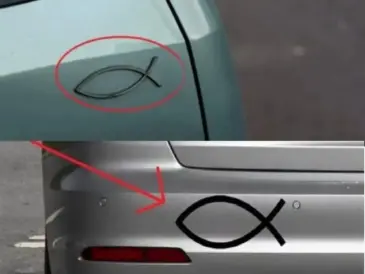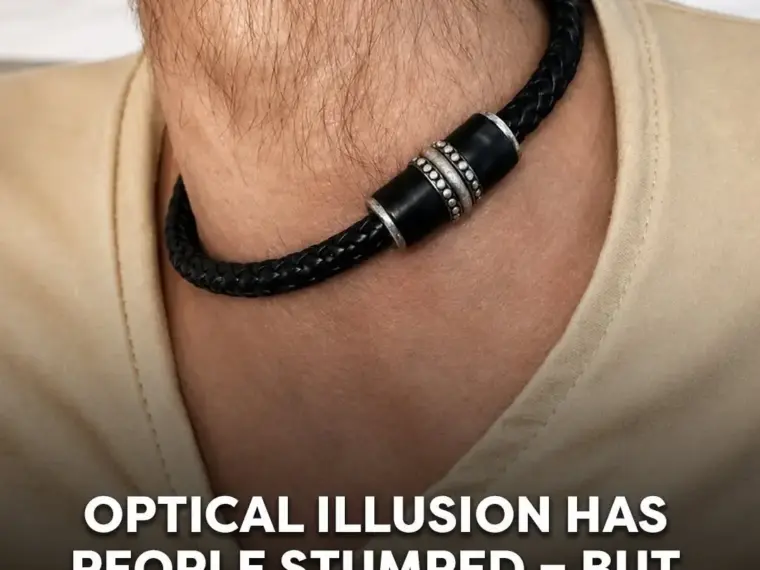
Here’s a \~1,500-word, viral-style blog post built around that headline, treating the optical illusion as a general puzzle rather than claiming a specific viral image or solution.
Solve Brainteaser Puzzles
Optical Illusion Leaves People Baffled As They ‘Take Way Too Long To See It’
# Optical Illusion Leaves People Baffled As They ‘Take Way Too Long To See It’
At first glance, it looks completely ordinary.
You stare at the picture.
Nothing seems unusual.
Play Trivia Games
You scan it from left to right. Then from right to left. You look closer, perhaps even zoom in, expecting the hidden detail to suddenly reveal itself.
Download Blog Templates
Then someone tells you what you’re supposed to find—and suddenly, it becomes impossible to understand how you missed it.
That is the strange power of optical illusions.
A seemingly simple image can turn into a surprisingly difficult mental challenge, leaving people staring at their screens for minutes while trying to spot something that may have been visible the entire time.
Explore Stock Photos
One optical illusion in particular has been leaving viewers baffled, with people joking that they are taking “way too long to see it.”
So why can something so obvious become so difficult to notice?
The answer has a lot to do with how the human brain processes visual information.
## Your Eyes See More Than Your Brain Notices
Solve Brainteaser Puzzles
One of the biggest misconceptions about optical illusions is that they are simply tricks played on the eyes.
In reality, the brain plays an enormous role.
Your eyes collect information from the world, but your brain has to interpret that information. It decides what objects are important, what shapes belong together, where the foreground ends and the background begins, and what details can safely be ignored.
Play Trivia Games
This system is extremely useful in everyday life.
Imagine trying to consciously process every single detail in a crowded supermarket.
You would notice hundreds of colors, labels, shapes, faces, shelves, lights, sounds, and movements.
It would be overwhelming.
Access Research Databases
Instead, your brain filters information and focuses your attention on what appears relevant.
Optical illusions exploit that filtering process.
They create situations in which the brain’s normal shortcuts lead it toward an unexpected interpretation.
## Why Hidden Objects Can Be So Difficult to Find
Solve Brainteaser Puzzles
Many popular optical illusions involve a hidden object, animal, number, face, or shape.
The hidden element is often disguised by similar colors, overlapping outlines, shadows, textures, or surrounding patterns.
Your brain doesn’t necessarily register every individual component separately.
Instead, it attempts to organize the scene into meaningful groups.
This process is partly related to principles studied in Gestalt psychology, which examines how people perceive patterns and wholes.
Play Trivia Games
For example, when several shapes are positioned close together, your brain may naturally interpret them as belonging to one larger object.
That can make a hidden figure surprisingly difficult to recognize.
You may technically be looking directly at it without consciously identifying it.
## The “I Can’t See It” Effect
Access Writing Tools
There’s a particularly funny moment that happens with difficult optical illusions.
At first, you have no idea what you’re looking for.
You stare.
You squint.
Solve Brainteaser Puzzles
You move your phone closer to your face.
You tilt the screen.
You ask someone else whether they can see it.
Then, eventually, you find it.
Order Custom Logos
And everything changes.
The hidden object suddenly seems obvious.
This phenomenon is sometimes described informally as a perceptual “aha” moment.
Your brain has shifted from one interpretation of the image to another.
Play Trivia Games
Once you know what you’re looking for, your attention becomes much better at identifying the relevant features.
That is why someone can spend five minutes struggling with an illusion and then immediately spot the answer after receiving a small hint.
## Why Hints Make Optical Illusions Easier
Suppose you’re looking at an image containing dozens of leaves and you’re told there is a particular animal hidden somewhere among them.
Explore Stock Photos
Without that information, your brain may simply interpret the image as a collection of leaves.
After receiving the hint, you begin searching for shapes that resemble the animal.
Your visual attention changes.
You may start noticing curves, eyes, outlines, shadows, or gaps that previously seemed meaningless.
The image hasn’t changed.
Access Writing Tools
**Your interpretation has changed.**
That’s one reason optical illusions are so fascinating.
They demonstrate that perception isn’t simply a matter of receiving information. It is also a process of interpretation.
## Why Some People Spot It Immediately
Solve Brainteaser Puzzles
If you struggle with an illusion while someone else solves it in seconds, that doesn’t necessarily mean they’re smarter than you.
Visual puzzles can depend on many factors.
Experience matters.
People who regularly solve puzzles may quickly recognize common illusion techniques.
Access Research Databases
Attention matters too.
If you’re tired, distracted, or looking at the image on a small screen, you may miss details that would otherwise be obvious.
Lighting and image quality can also make a difference.
Even expectations can influence your performance.
Explore Stock Photos
If you’re convinced the hidden object is near the center, you might spend most of your time searching there while completely ignoring the edges.
Another person might naturally scan the image differently and discover the answer almost immediately.
## The Brain Loves Patterns
Human beings are exceptionally good at recognizing patterns.
Play Trivia Games
This ability has enormous evolutionary value.
Recognizing a familiar face, identifying an animal in the distance, noticing movement in vegetation, or distinguishing one object from another can all be important.
But pattern recognition can also produce mistakes.
The brain sometimes detects patterns that aren’t actually there.
Access Writing Tools
This is known as **pareidolia**.
It’s why people sometimes see faces in clouds, buildings, tree bark, or random household objects.
Optical illusions can take advantage of the same tendency.
They encourage your brain to organize ambiguous visual information into a particular pattern.
Explore Stock Photos
Sometimes the result is surprisingly convincing.
## The Importance of Perspective
Another reason an illusion may be difficult is perspective.
Order Custom Logos
A hidden object may be easier to see when you stop looking for the object as a whole.
Instead, try examining the image differently.
Look for unusual curves.
Search for symmetry.
Solve Brainteaser Puzzles
Look for an area where the texture changes.
Pay attention to negative space—the empty areas surrounding objects.
Sometimes the hidden figure isn’t represented by a conventional outline at all. Instead, it emerges from the relationship between several surrounding shapes.
Changing your viewing distance can also help.
Play Trivia Games
Try moving farther away from the screen.
Then move closer.
Your brain receives a slightly different visual impression at different distances, and sometimes the hidden pattern suddenly becomes apparent.
## Why People Love Sharing These Puzzles
Access Research Databases
Optical illusions are almost perfectly designed for social media.
They are quick to understand.
They don’t require specialist knowledge.
They create curiosity.
Explore Stock Photos
And most importantly, they encourage people to challenge their friends.
A person who solves the puzzle often wants to test someone else.
“Can you see it?”
“Look carefully.”
Order Custom Logos
“How long did it take you?”
Those questions create interaction.
The result is a simple image that can generate thousands of comments and conversations.
Some people proudly announce that they spotted the hidden detail immediately.
Solve Brainteaser Puzzles
Others admit that they stared at the image for several minutes.
And there are always people who insist they still can’t see it—even after everyone else has revealed the answer.
## Don’t Give Up Too Quickly
If you encounter an optical illusion and can’t solve it immediately, don’t assume you’re missing something obvious.
Play Trivia Games
Try changing your strategy.
First, look at the entire image rather than focusing on one small area.
Then systematically scan from one side to the other.
Look for differences in texture, shape, color, and symmetry.
Access Writing Tools
Try blinking or briefly looking away before returning to the image.
You can also change the distance between your eyes and the screen.
Most importantly, don’t stare at the same spot indefinitely.
When your attention becomes fixated, you may repeatedly process the image in exactly the same way.
Explore Stock Photos
A change in approach can sometimes be enough to trigger the answer.
## The Fun Is in the Struggle
One reason these puzzles are so satisfying is that difficulty makes the eventual solution more rewarding.
If the hidden object were immediately obvious, there would be no challenge.
Solve Brainteaser Puzzles
The frustration is part of the experience.
You struggle.
You doubt yourself.
You search again.
Access Writing Tools
Then suddenly—
There it is.
That moment of recognition can feel surprisingly satisfying.
It’s a tiny example of how the brain solves problems: gathering information, testing interpretations, rejecting possibilities, and eventually arriving at an explanation that fits.
Access Research Databases
## What Optical Illusions Teach Us
Beyond entertainment, optical illusions offer an interesting reminder about human perception.
We don’t experience the world as a perfect photograph.
Our brains constantly interpret what our senses provide.
Solve Brainteaser Puzzles
We filter information.
We prioritize certain details.
We use previous knowledge and expectations.
We fill in gaps.
Play Trivia Games
Most of the time, these processes work remarkably well.
But optical illusions reveal the machinery behind them.
They show us that seeing isn’t quite as simple as opening our eyes.
Sometimes the most important part of vision happens after the light reaches the eyes—inside the brain.
Access Research Databases
## So, Did You Spot It?
That’s the real challenge.
The next time you see an optical illusion that seems ridiculously easy to everyone except you, don’t worry.
You aren’t necessarily missing something because you’re not intelligent or observant.
Your brain may simply be interpreting the image differently.
Take your time.
Explore Stock Photos
Change your perspective.
Search systematically.
And resist the temptation to look at the same place over and over.
Because the most frustrating optical illusions often work precisely because the answer is hiding in plain sight.
Solve Brainteaser Puzzles
And once you finally see it, there’s a good chance you’ll have the same reaction as countless other viewers:
**“How did I not notice that before?”**
That’s the magic of a great optical illusion.
It doesn’t change what you’re looking at.
Play Trivia Games