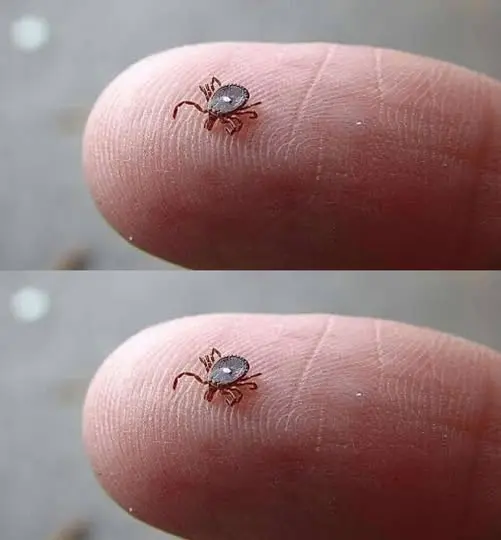
The image shows a tiny tick resting on a fingertip — a reminder of how small yet potentially dangerous these parasites can be. Ticks are external parasites that feed on the blood of humans and animals. Despite their size, they can transmit serious diseases, making awareness and prevention essential for anyone who spends time outdoors.
 WHAT IS A TICK?
Ticks belong to the arachnid family, related to spiders and mites. They have eight legs and a hard outer shell. Most species are found in grassy, wooded, or humid areas where they wait for hosts to pass by. Once attached, they pierce the skin and feed on blood for several hours or even days.
HEALTH RISKS ASSOCIATED WITH TICKS
Ticks are known carriers of several diseases, including:
Lyme disease — Caused by Borrelia bacteria, leading to fever, fatigue, and joint pain.
Rocky Mountain spotted fever — Characterized by rash, high fever, and muscle aches.
Tick-borne encephalitis — A viral infection affecting the brain and nervous system.
Babesiosis — A parasitic infection that attacks red blood cells.
While not every tick carries pathogens, the risk increases with prolonged attachment.
HOW TO REMOVE A TICK SAFELY
If you find a tick on your skin:
Use fine-tipped tweezers to grasp the tick as close to the skin as possible.
Pull upward steadily without twisting or jerking.
Clean the area with soap, water, and antiseptic.
Dispose of the tick by sealing it in a bag or flushing it down the toilet.
Monitor for symptoms like fever or rash over the next few weeks.
Avoid using heat, petroleum jelly, or chemicals — these can cause the tick to release more pathogens.
PREVENTION TIPS
Wear long sleeves and pants when hiking or gardening.
Apply insect repellent containing DEET or picaridin.
Check your body and pets after spending time outdoors.
Keep grass trimmed and remove leaf litter around your home.
INTERESTING FACT
Ticks don’t jump or fly — they use a behavior called “questing.” They climb onto grass or leaves and stretch out their front legs, waiting to latch onto a passing host.
CONCLUSION
Ticks may be small, but their impact on health can be significant. Awareness, prevention, and prompt removal are key to avoiding tick-borne diseases. If you develop unusual symptoms after a tick bite, consult a healthcare professional immediately.